Booster Pump Installation in Corydon, IN
Booster pump installation for Corydon, IN homes includes pump sizing and electrical coordination; typical jobs run $800–$2,500, depending on pump capacity and electrical work.
Corydon’s older brick and limestone buildings can hide long plumbing runs where weak flow is easy to miss until an upstairs faucet barely works. Around Harrison Grange and Hillcrest, our crew checks whether the problem is limited to one fixture or affects the whole supply before recommending a repair.
We take pressure readings, inspect accessible valves and trace likely restrictions in the home’s plumbing. Freeze-thaw cycles can stress buried water lines, so a sudden drop may call for checking the service line as well as indoor pipes. A gauge reading helps distinguish a supply problem from a fixture issue.
Flooding can affect private wells and may require water-quality checks before the system is put back into normal use. If your property relies on a well, we can assess pressure equipment and explain what the readings show.
Our team has served Corydon for more than 11 years. Call (877) 773-0781 to discuss the symptoms and arrange a visit; we’ll explain the findings and complete only the work you approve.
Booster pump installation for Corydon, IN homes includes pump sizing and electrical coordination; typical jobs run $800–$2,500, depending on pump capacity and electrical work.
We trace sudden pressure loss for Corydon, IN homeowners, checking fixture flow and accessible supply lines; typical repairs run $150–$500, depending on access and parts.
We test residential water pressure with a gauge and compare static and flowing readings; testing time and access shape the diagnostic fee.
We repair residential pressure regulators, including accessible valve and connection work; typical repairs run $250–$700, depending on valve size and labor.
Low hot water pressure service checks hot-side valves, fixtures, and accessible pipe restrictions; typical repairs run $150–$600, depending on access and parts.
We trace weak cold-water flow in homes, checking fixtures and accessible supply piping; typical repairs run about $100–$500, depending on access and the affected pipe section.
Low Faucet Water Pressure service for homeowners with weak sink flow, including aerator and faucet checks; cost depends on access, parts, and the source of the restriction.
We restore weak shower flow by checking the showerhead, valve and supply path; access and repair scope shape the cost.
Whole-house pressure service traces weak flow across a home’s supply, fixtures, and pressure controls. Typical repair costs depend on the source, parts, and access.
We repair residential well pumps and pressure controls, checking the tank and switch; typical repair costs $300–$1,200 depending on tank size and parts.
Repair well pressure tanks for homeowners, including tank and component work; typical jobs run $300–$1,200, depending on tank size and parts.
We trace weak upstairs flow in homes, checking the pressure path and accessible piping. Repair scope depends on access, pipe condition, and parts.
We replace household pressure regulators, including valve sizing and fit; typical jobs run $250–$700, driven by valve size and labor.
We clear or repair clogged residential water lines, including accessible pipe sections; typical jobs run $200–$1,500, depending on blockage location and pipe access.
We repair softener valves, clogged resin beds, and bypasses; typical repairs run $150–$600, depending on parts and access.
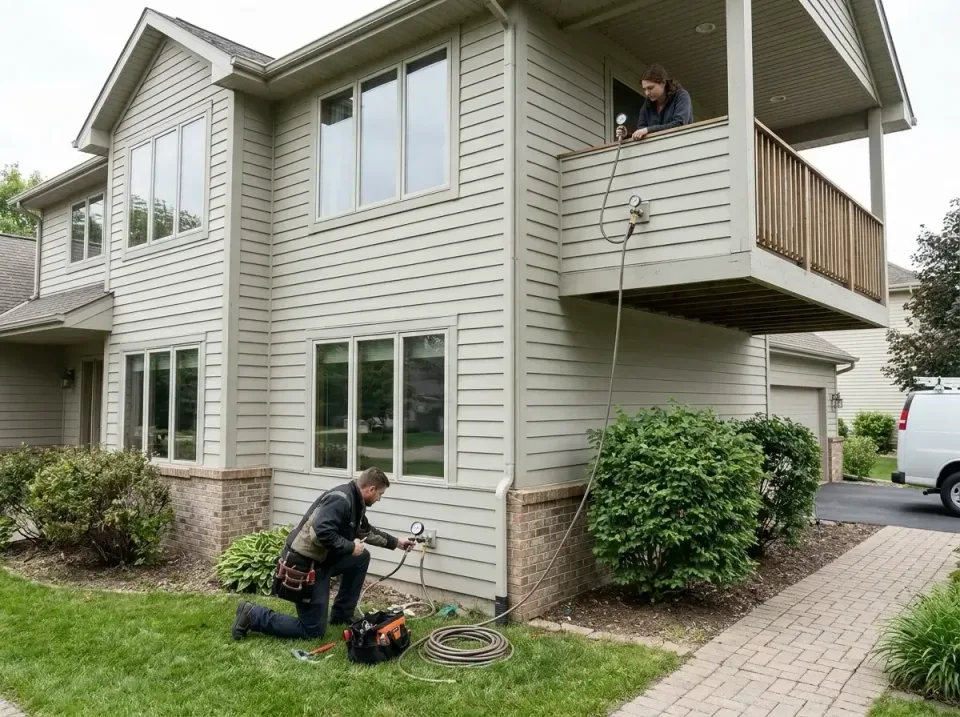
Near the Harrison County Courthouse, older plumbing can make a pressure problem harder to trace than a single weak faucet suggests. Summer heat and humidity can raise household water demand, so a drop during busy use deserves a measured check rather than a guess. After heavy summer thunderstorms, municipal service may be disrupted; we compare conditions at several fixtures before deciding whether the cause is inside or upstream.
Our crew identifies whether the home has municipal supply or a private well, checks the likely source, and explains repair choices in plain language. Drought can reduce private well production, while seasonal groundwater changes may affect well performance; we consider those conditions when evaluating well pressure.
A shower stream that suddenly weakens or upstairs faucets that barely run needs a whole-home comparison first. In Corydon, spring rainfall can saturate soil around buried service lines, so our crew checks pressure at more than one point and looks for signs of a supply-line issue. You can safely compare two fixtures at different times and note whether the change persists.
Cold-weather damage matters, too. Frozen pipes or a damaged outdoor hose bib can restrict flow, while hard freezes may expose poorly insulated plumbing; check whether an exterior tap also runs weak, without opening or dismantling anything.
Corydon’s Corydon Capitol State Historic Site is a familiar reference point for our local service area, and we schedule visits throughout ZIP code 47112. Our diagnosis guides the repair we recommend, whether the restriction is at a fixture or elsewhere in the home.
How do Corydon’s storms affect a low-pressure visit? We begin by asking whether the drop followed heavy rain, then compare flow at separate fixtures before opening plumbing. Near the Battle of Corydon battlefield, frequent spring and summer storms can make buried-line conditions worth checking when pressure changes across the house.
Southern Indiana winters are generally milder than those farther north, but a cold snap can still affect exposed plumbing. We check accessible pipe runs and fixture shutoffs before recommending a repair. For low cold water pressure, our crew isolates the affected branch and looks for a restriction rather than assuming the whole supply is weak.
If softened water equipment is part of the plumbing, water softener repair may be relevant when flow changes across fixtures after that equipment. A clogged water pipe causing low pressure is another possibility; we look for evidence before proposing access work. Note which taps are affected and when the change occurs, then call if the pattern continues.
Corydon homeowners should not assume every plumbing repair needs the same permit; local requirements depend on the work and municipality. Skipping a required inspection can leave concealed work unverified and create trouble when a property is repaired or sold.
For a weak shower in a Corydon home, our crew first determines whether the issue is a fixture restriction or a larger plumbing change that may trigger local review. The EPA Lead and Copper Rule applies to public water systems, not as a general household pressure standard. We explain what approvals appear necessary and confirm local requirements before work proceeds.
Get a clear explanation of the pressure problem and repair options from a team serving communities across Indiana.
The technician explains the findings and reviews repair options before work begins. That gives you a chance to understand the proposed scope and choose how to proceed without surprises about what the repair addresses.
With residential plumbing experience around Indianapolis, the team understands how older homes and mineral buildup can affect pressure. They schedule service across Indiana, coordinating routes to reach Corydon and smaller communities.
From your first call through the final flow check, the crew explains what is happening at each stage.
Schedule Diagnosis
Call to describe the pressure concern and arrange a diagnostic visit. The team coordinates its Indiana routes to serve Corydon, then the technician checks the affected fixtures and plumbing system.
Test Pressure
The technician records static and flowing pressure, then tests multiple fixtures to help isolate a local restriction or broader system issue. You get findings based on checks at your home.
Repair And Retest
Before opening pressurized piping, the technician shuts off the water; electrical work requires pump power isolation. After the agreed repair, the crew retests pressure and fixture flow so you can see the result.
Sputtering at a tap can signal air or an interruption in the water flow. Notice whether it happens at one fixture or several, and whether it continues after the faucet has run briefly. That detail can help describe the issue when arranging a diagnosis.
Pressure that rises and falls during ordinary use is worth paying attention to, even if it later seems normal. Note which fixtures are running and whether the change repeats. Sharing that pattern helps the technician focus on the right parts of the plumbing system.
A noticeable change in how water flows from a fixture can be an early clue, even before the flow becomes unusable. Compare nearby taps and note whether the change affects hot water, cold water, or both, without taking apart the fixture.
Frequent spring storms can make it a useful time to check a pressure concern that has appeared around the home. A technician can test pressure and fixture flow, then explain whether the issue points to a fixture or a wider plumbing system concern.
Humid Ohio Valley conditions and frequent storms make home water systems part of everyday upkeep. If pressure changes during routine use, a diagnostic visit can help identify the source and clarify repair options without waiting for the problem to worsen.
Fall is a practical time to investigate inconsistent pressure before colder weather arrives. The technician can check fixtures and system pressure, explain the findings, and discuss a repair suited to the cause rather than guessing at a fix.
Mild winters can still bring occasional snow and hard freezes, which may affect plumbing in some homes. If pressure changes, arrange a diagnosis to check the affected fixtures and system. The crew can explain what it finds and review repair options.
Permit needs can depend on the work and local requirements. Ask the provider to clarify whether permits apply and who handles them, so responsibilities are clear before any plumbing work begins.
The business coordinates routes across Indiana to serve cities and smaller communities. Ask about scheduling and the expected visit window so you can plan access to the home and affected fixtures.
Some pressure causes may involve a well system, regulator, or plumbing lines. Asking about access ahead of time helps you prepare relevant areas and identify where shutoffs or equipment are located.
Ask how repair options and any written terms are reviewed before work begins. Knowing what is included, what is excluded, and how approval is handled helps prevent confusion about the agreed work.
Request a quote online or contact our Corydon, IN team directly by phone or email.
A weak upstairs faucet can result from a restriction or a broader supply issue. Our crew compares pressure at multiple fixtures and checks accessible valves before recommending a repair. Note whether downstairs taps are affected too.
Heavy summer thunderstorms can disrupt municipal water service, and rain can saturate soil around buried service lines. If pressure drops after a storm, note whether every fixture is affected and whether the issue continues.
Check whether one faucet or several fixtures have weak flow, and note whether hot and cold sides behave differently. Keep the water meter and accessible plumbing areas clear; do not dismantle valves or pressure equipment.
Low Water Pressure Repair is also available in these nearby communities across Indiana.